
Men Bag Guides
The Men’s Weekender Bag Guide: Size, Material and What Fits
Aug
My first weekender was a mistake in the shape of a bag. It was a handsome leather duffel, exactly the kind of thing that looks great in a hotel lobby, and it was far too small for the way I actually travel. I spent a long weekend in it, and by Sunday I was wearing the same shirt twice and carrying my jacket in my hands because the bag could not close over it. The weekender is the easiest bag to get wrong, because the whole category is sold on looks and almost never on liters. This is the guide I needed before that trip.
Size: It Is All About Liters
Weekenders are measured in liters, and the range that matters for men is roughly thirty to forty-five. Thirty liters is a two-day bag: a change of clothes, toiletries, a laptop, and nothing else. Thirty-five to forty liters is the sweet spot for a three-day trip, which is what most weekenders are actually for, with room for an extra pair of shoes or a light jacket. Forty-five liters is the ceiling if you fly, because it is the edge of what fits in the overhead bin and under the seat, and it can carry four days if you pack smart. Anything bigger is a gym bag pretending to be a weekender, and anything smaller is a fancy lunch bag.
Here is the rule I use now: decide the trip first, the bag second. If your weekends are one night in a hotel, buy thirty liters. If they are Thursday-to-Sunday, buy forty. And remember that the bag has to close over everything, so subtract ten percent from the marketing number, because the marketing number always assumes perfectly soft contents and a light hand.
Material: Leather Is Not the Only Answer
Leather is the classic weekender material, and it is gorgeous, but it is also heavy, and weight matters on a bag you carry with one hand while rolling a suitcase with the other. A leather weekender can weigh four to six pounds empty, and that is real weight on top of your clothes. The trade-off is worth it for many men, because a leather weekender is the single best-looking travel accessory a man owns, and it ages into something personal. Just be honest about the type of leather, same rules as always: full-grain and top-grain age well, bonded leather flakes, and a weekender takes more abuse than a briefcase, so the construction has to be tougher.
Waxed canvas and ballistic nylon are the practical alternatives: lighter, tougher, and easier to clean, at the cost of some of the romance. My honest take: if you travel weekly, get the tough material and save the leather for the trips that matter. If you travel monthly or less, the leather weekender is worth its weight, because the bag is part of the experience.
What Fits, and How to Pack It
Let me be specific about what a forty-liter weekender actually holds, because this is where most men misjudge. It holds two or three outfits, depending on how thick your clothes are, a pair of shoes, a toiletries kit, a charger and cables, and a laptop in a sleeve if the bag has a dedicated compartment. That is a Thursday-to-Sunday trip, done properly. The classic packing method is roll, don’t fold, because rolled clothes pack tighter and wrinkle less, and shoes go in first, in a shoe bag, at the bottom, so they do not crush anything.
Two things I always check now. First, does the opening give you access to the whole bag? A wide, horseshoe-style opening that unzips almost the entire top is dramatically easier to pack than a small mouth, and the difference is visible within thirty seconds of loading. Second, does it have any structure? A weekender that collapses into a puddle when empty is a weekender that will crush your sandwiches on the way to the beach, while a bag with a reinforced base and sides keeps its shape and protects the contents. You do not want a rigid suitcase, but you do want a spine.
Carrying: The Straps Make or Break It
A weekender has up to three carry modes, and a good one does all three well. Top handles for short carries, a shoulder strap for the airport walk, and ideally a luggage sleeve or pass-through so it can ride on your rolling suitcase. The shoulder strap is where most budget weekenders fail: too thin, too flimsy, and the whole weight of the bag concentrates in a narrow strip of webbing. Look for a padded strap, at least an inch and a half wide, with solid metal hardware at both ends, and check how the strap attaches to the bag, because that attachment point is the most common failure on the entire category.
The handles deserve a look too. They should be stitched and riveted into the structure, not just tacked on, and they should be comfortable with the bag fully loaded. Test it in the store with weight in the bag, because an empty-bag handle test tells you nothing.
Details That Decide the Deal
A few small things separate a great weekender from a fine one. Zippers: the main zipper on a weekender takes serious abuse, so it should be heavy-duty with chunky teeth, and it should run smoothly around the curves of the bag, which is where cheap zippers jam. Interior pockets: you want at least one zippered pocket for the small stuff, and a dedicated shoe or laundry compartment is a genuine upgrade. Feet on the bottom: four small metal feet keep the leather out of the puddles and the dirt, and they are the cheapest durability feature a manufacturer can add. And finally, the weight of the empty bag, which I mentioned at the start and will mention again, because it is the detail men always forget and always regret.
Get those right and the weekender becomes the bag you reach for first, every time the weekend comes around. Get them wrong and you will know it somewhere between the hotel lobby and the taxi.
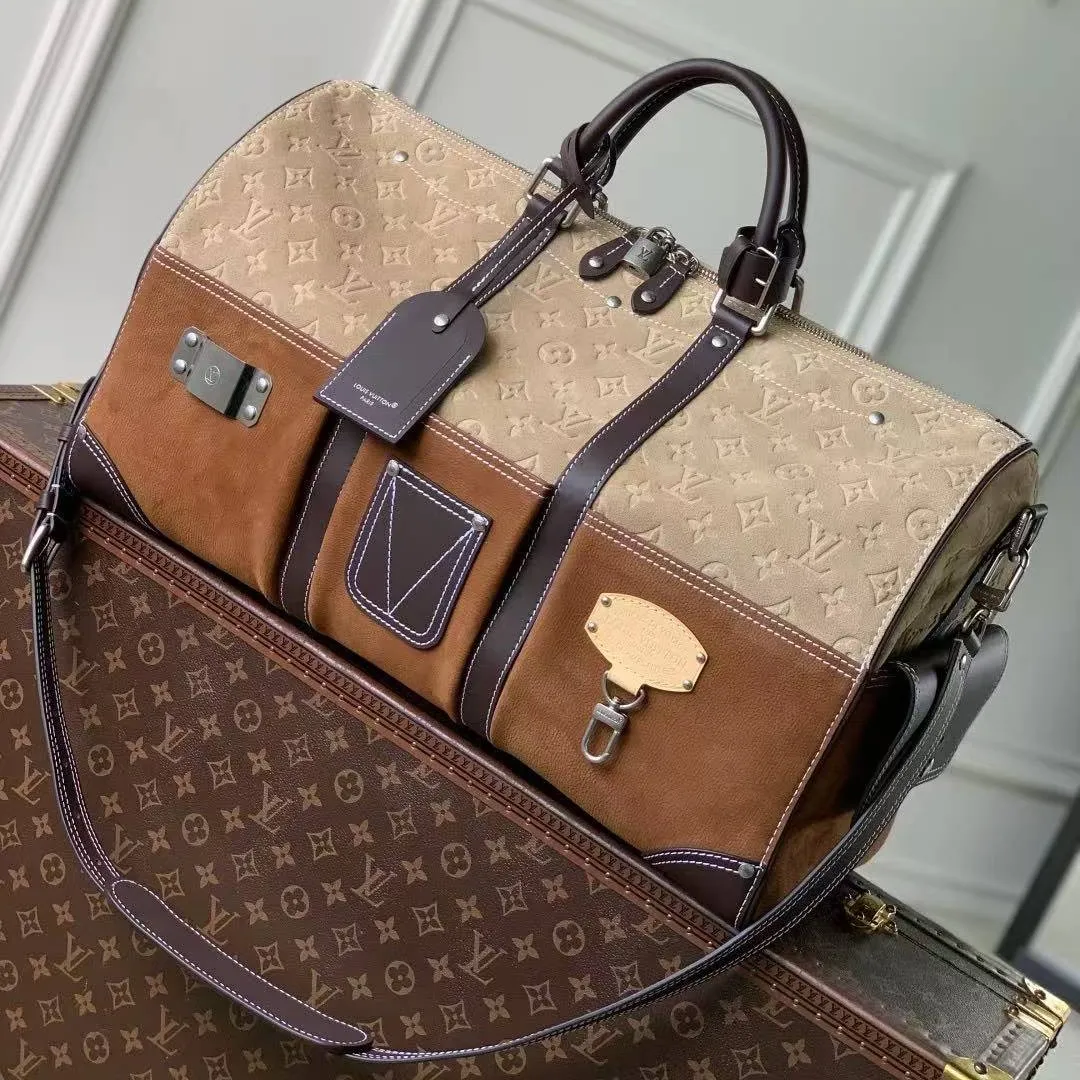
For a sense of how the broader luggage and bag market is shifting, WWD covers the travel category’s ups and downs every season.
Ready to find your weekend companion? Browse our men’s designer-inspired leather bag collection and pack for the weekend in style.
Related reading: Men’s Leather Bag Buying Guide: Briefcases, Backpacks & Messenger Bags · The Complete 101 Buying Guide · The Best Men’s Leather Backpacks: What to Look for and What to Avoid · The Men’s Leather Wallet Guide: Bifold, Trifold, Card Holder or Money
For the industry perspective, United States Leather publishes regular updates on this space.