
Men Bag Guides
Briefcase vs Backpack vs Messenger: The Honest Comparison for Working Men

Aug
Every working man eventually hits the same wall: he needs a bag, and there are three shapes staring back at him, and every review site is written by someone who clearly only owns one of them. I have owned all three, at the same time, for the better part of fifteen years, and I have strong opinions about all of them. Here is the honest version, including the parts the marketing leaves out.
The short version: the briefcase says “I mean business,” the backpack says “I get things done,” and the messenger says “I am probably a freelancer or a creative.” None of those are bad. The question is which one matches the job you actually have, not the job you describe at dinner parties.
Start With Your Commute, Not Your Title
The single biggest mistake men make is buying the bag their job title suggests instead of the bag their actual day requires. A lawyer who walks three blocks to court needs something completely different from a consultant who flies twice a week, and both need something different from a software engineer who bikes to an office with no dress code. So before anything else, answer two questions: how do you get to work, and what do you carry when you get there?
If you walk or take transit, weight distribution decides everything, and that instantly favors the backpack. If you drive, a briefcase rides fine in the passenger seat. If you fly weekly, you want a bag with a luggage sleeve and a shape that slides under the seat in front of you. And be honest about the laptop. If you carry a sixteen-inch machine daily, that alone eliminates half the messengers and a lot of slim briefcases on the market.
The Briefcase: Professional Signal, Real Trade-Offs
The briefcase is the classic for a reason. It reads competence, it works with a suit, and it sits on a conference table without looking like you are about to go rock climbing. There are two modern flavors: the structured top-handle case, which is formal, holds less, and looks best with tailoring, and the soft portfolio style, which fits more, weighs less, and slides into smart-casual territory without embarrassment.
But let me be honest about the downsides, because nobody at the store will tell you. A briefcase is a one-shoulder bag, which means the weight lives on one side of your body, and a loaded briefcase carried daily will make your shoulder and neck complain by Friday. They also hold less than they look like they hold, because the structure eats the space. And a briefcase outside of work hours looks wrong in a way that a backpack never does. You will not wear it to the farmers market.
The Backpack: The Workhorse, Stigma Gone
The backpack used to be the thing you carried when you did not care how you looked. That era is over. A quality leather backpack carries a laptop safely, distributes weight across both shoulders, and goes from the office to casual Friday without a costume change. It is, objectively, the most comfortable and practical of the three, and most men who own all three reach for it more than they expected to.
The one honest caveat is the impression it makes. In a formal environment, a backpack still reads slightly more junior than a briefcase, even a beautiful leather one. If you present to executives weekly, that matters more than comfort. If you never present to anyone, it does not matter at all, and anyone who tells you otherwise is selling briefcases.
The Messenger: Stylish, With a Posture Tax
The messenger bag is the middle child. It is more casual than a briefcase, more accessible than a backpack, and the crossbody position keeps your hands free and your phone reachable. It works great for creatives, freelancers, consultants who live in coffee shops, and anyone who moves between meetings and laptops all day. It also looks genuinely cool in a way the other two do not, and I say that as someone who owned three of them in a row.
The trade-off is ergonomics, and it is real. A heavy messenger pulls on one shoulder and one side of the neck, and over a year of daily use that adds up. Keep the load light, get a padded strap at least an inch and a half wide, and if you carry a laptop plus a lunch plus gym clothes, the messenger is the wrong tool. It is a light-carry bag that men keep trying to use as a heavy-carry bag.
The Verdict, by Type of Working Man
Let me just give you the answers, because you came here for them. If you present to clients and wear suits: briefcase, and make it leather, structured, and dark. If you carry a laptop daily and care about your back: backpack, and get one with a padded compartment and a luggage sleeve. If you carry light and want style: messenger, but keep it under ten pounds total. If you do all three depending on the week: get two, a backpack for the heavy days and a messenger or slim briefcase for the client days. That is not indulgent, that is logistics.
And one observation from the field: the men I know who look the most put-together at work are not the ones with the most expensive bags. They are the ones whose bag matches their day. A good bag you actually use beats a great bag you leave at home.
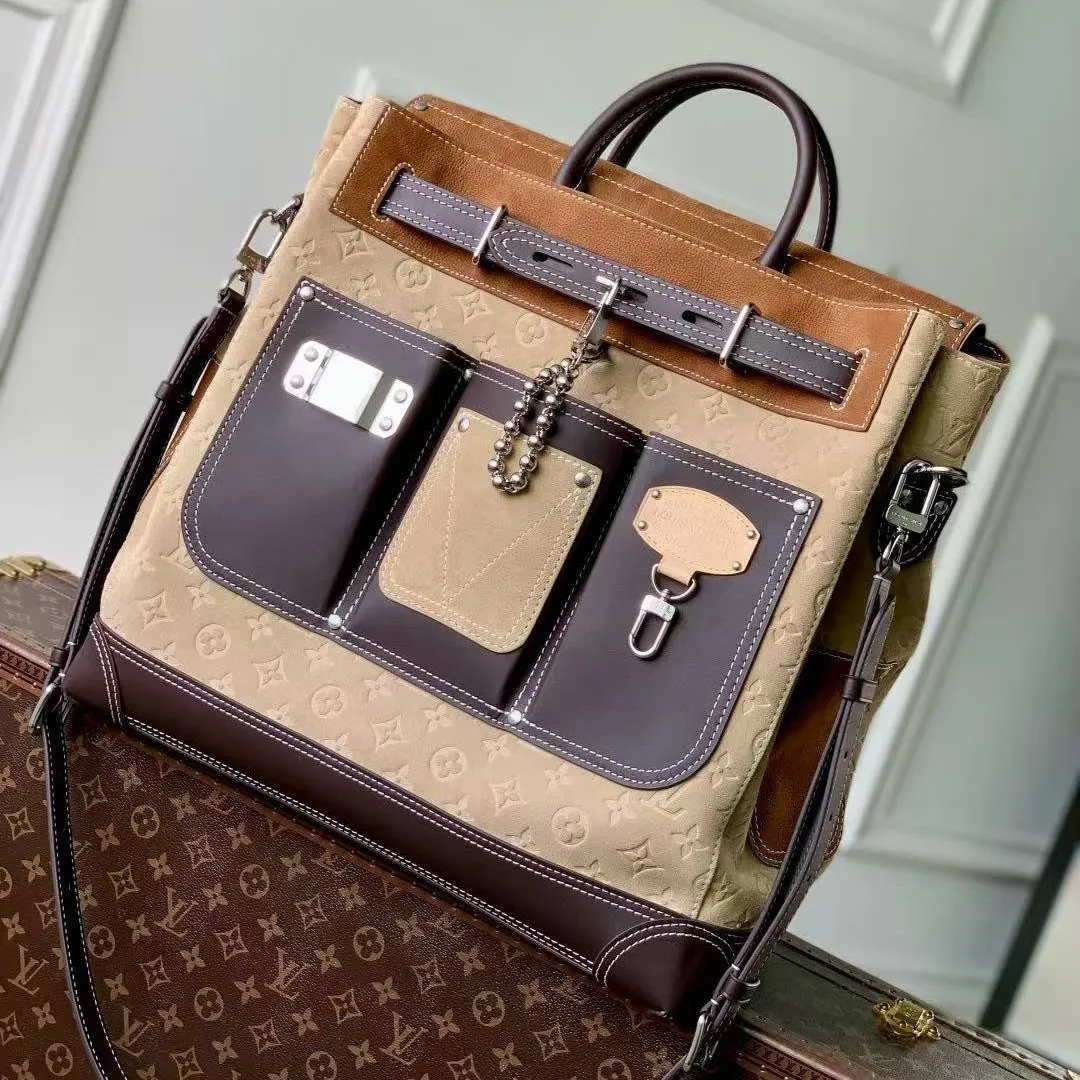
If you want to see where men’s work bags are heading, The Business of Fashion covers how the men’s accessories category keeps growing year after year.
Ready to pick your daily carry? Look through our men’s designer-inspired leather bag collection and find the shape that fits your actual week.
Related reading: Men’s Leather Bag Buying Guide: Briefcases, Backpacks & Messenger Bags · The Complete 101 Buying Guide · The Best Men’s Leather Backpacks: What to Look for and What to Avoid · The Men’s Leather Wallet Guide: Bifold, Trifold, Card Holder or Money
For the industry perspective, United States Leather publishes regular updates on this space.